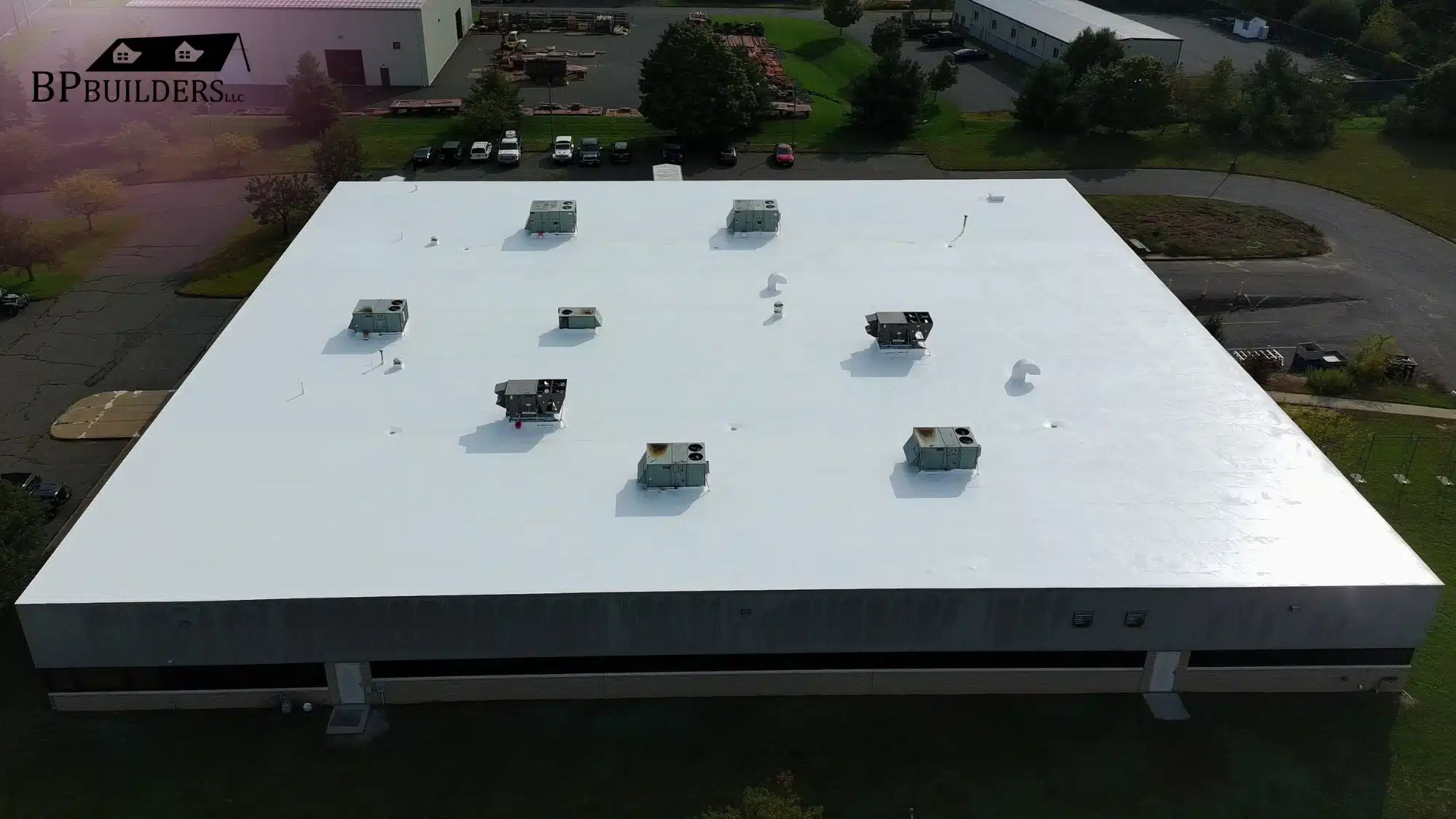
For building owners and facility managers, deciding whether to repair or replace a commercial roof begins with identifying the roofing system and assessing the extent of damage. BP Builders provides professional roof assessments and repairs for commercial properties. If you’re searching for “commercial roof repairs near me,” our team can help determine whether a repair is feasible, cost-effective, and durable.
Overview of Common Commercial Roofing Systems
- Built-Up Roofing (BUR): BUR systems combine asphalt with reinforcing fabrics and a protective ballast or cap sheet. Repairs typically involve patching damaged plies, resealing flashings, and addressing blisters or cracks. Localized damage and a solid substrate support a repair, but widespread deterioration or a compromised deck often necessitates replacement.
- Modified Bitumen: Modified bitumen is an asphalt-based membrane with enhanced modifiers for flexibility. Repairs focus on damaged plies, seams, and flashings. If delamination or multiple failed seams occur, replacement is usually more reliable than patching.
- EPDM (Ethylene Propylene Diene Monomer): A common rubber membrane for flat or low-slope roofs. EPDM repairs include seam calking, patching punctures, and resealing edges. Large areas of aging or widespread leaks may indicate the need for membrane replacement rather than repair.
- TPO (Thermoplastic Olefin): A single-ply membrane known for energy efficiency. Repairs address compromised seams and flashings, typically through heat-welding or approved sealants. When aging, numerous seam failures, or extensive punctures are present, replacement becomes more cost-effective.
- PVC (Polyvinyl Chloride): Similar to TPO but with different material properties and fire resistance. PVC repairs are possible for small punctures or seam issues, but extensive deterioration often requires replacement, particularly on larger roofs.
- Metal Roofing: Standing-seam or panel metal roofs can often be repaired by replacing damaged panels, resealing seams, or addressing corroded fasteners. If corrosion or widespread panel damage is extensive, or the roof’s structural components are affected, a section or full roof replacement may be the prudent choice.
- SPF (Spray Polyurethane Foam): SPF roofs can be repaired by re-coating or applying protective topcoats to restore waterproofing. If the foam is severely degraded or damaged, a re-roof or replacement may be required.
- Green Roofs: Vegetative systems require both waterproofing and drainage integrity. Repairs focus on waterproof membrane integrity and drainage components; restoration of plantings may accompany structural repairs. Not all issues are easily repaired without affecting the living system, so professional assessment is essential.
Eligibility Guidelines for Repair vs. Replacement
- Localized damage vs. widespread deterioration: Small leaks, localized flashing failures, or isolated punctures are more likely candidates for repair. Extensive membrane wear, multiple failed seams, or structural deck issues often require replacement.
- Age and service life: Roofs nearing or exceeding their expected lifespan may be more cost-effective to replace, even if repairs are technically possible.
- Substrate condition: Damaged decks, insulation, or underlying structures can limit repair viability.
- Water intrusion and safety: Persistent leaks that compromise internal spaces or safety must be addressed promptly, with the repair vs replacement decision based on long-term protection.
- Warranty and manufacturer recommendations: Some systems have warranties that restrict or guide repairs; consult the manufacturer and your contractor.
- Cost-effectiveness: A professional assessment weighs repair costs against the projected lifespan of a repaired section versus full roof replacement.
- Climate and maintenance history: Regions with severe weather or long maintenance gaps may influence the decision toward replacement for reliability.
The Assessment Process: What to Expect
- Initial site inspection to identify the roofing system type and visible damage.
- Non-destructive testing and moisture assessment to determine substrate health.
- Evaluation of seams, flashings, penetrations, ballast, and drainage.
- A written proposal detailing repair options, estimated costs, timelines, and warranty terms.
- Clear guidance on whether a repair or replacement will provide better long-term performance.
Choosing a Contractor for Commercial Roof Repairs Near You
- Verify licensing, insurance, and safety programs (OSHA-compliant practices).
- Request references and review case studies related to your roofing system.
- Confirm manufacturer certifications and compatible materials for repairs.
- Ensure a written warranty for both workmanship and materials.
- Favor local contractors with knowledge of regional weather, codes, and building practices.
- Obtain a detailed written estimate and comparison of repair vs replacement scenarios.
Next Steps with BP Builders
If you’re evaluating options for your commercial roof, BP Builders can conduct a thorough assessment and outline practical repair avenues versus replacement considerations. For those searching for “commercial roof repairs near me,” contact BP Builders to schedule a professional inspection, discuss system-specific repair feasibility, and receive a clear, costed plan designed to protect your building and minimize downtime. Remember, a knowledgeable evaluation today helps ensure reliable performance and long-term value for your roof.